When buying a new set of irons, one of the biggest decisions you’ll face is choosing between cavity back and blade irons. These two styles offer very different benefits and are suited to different types of golfers. Whether you’re a beginner working on consistency or a seasoned player looking for feel and control, understanding the key differences will help you make the right choice.
In this guide, we break down the design, performance, and typical user profile for both cavity back and blade irons.
What Are Blade Irons?
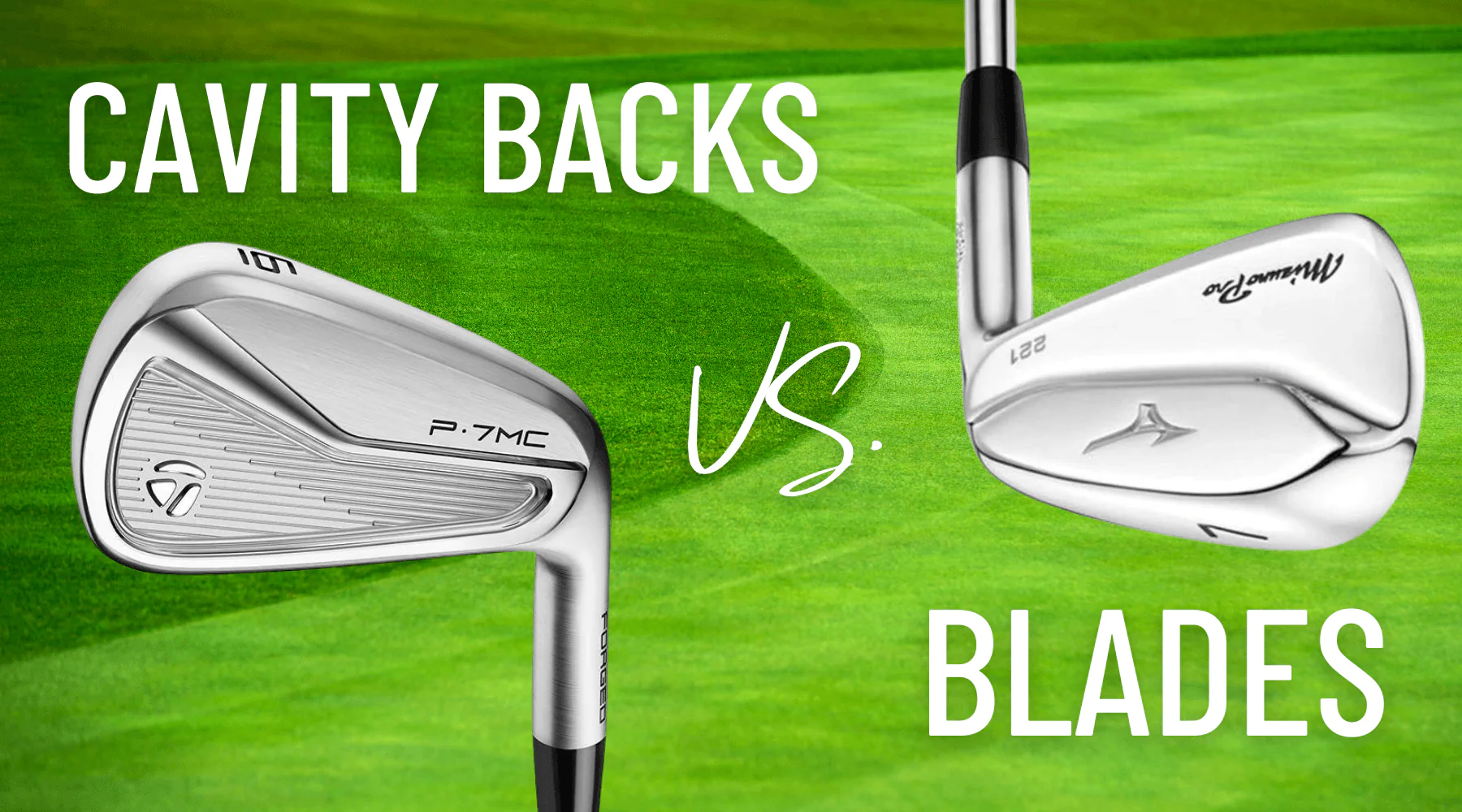
Blade irons – sometimes called muscle back irons – are traditional in shape and favoured by lower-handicap and professional golfers. They are forged from a single piece of metal and have a thin top line, compact head, and minimal offset.
Key Features:
Compact, sleek design
Thin sole and top line
Smaller sweet spot
Typically forged for better feel
Who They’re For:
Blade irons are best suited for confident ball strikers who want maximum control, feedback, and the ability to shape shots. These irons reward precision but are less forgiving on mishits.
Pros:
Excellent shot shaping and trajectory control
Pure feel and feedback
Traditional look preferred by experienced golfers
Cons:
Much less forgiving than cavity backs
Difficult for high-handicap or inconsistent players
Requires a consistent strike to perform well
What Are Cavity Back Irons?
Cavity back irons are engineered with a hollowed-out section at the back of the club head. This design redistributes weight around the perimeter, making the club much more forgiving on off-centre strikes. Most modern game improvement irons fall into this category.
Key Features:
Larger head with a thicker top line
Perimeter weighting for forgiveness
Wider sole for better turf interaction
Cast or forged construction
Who They’re For:
Cavity backs are ideal for beginners, intermediate players, and anyone looking to improve consistency. They help maximise distance, launch, and forgiveness, even on poor strikes.
Pros:
Much easier to hit consistently
Helps produce higher launch and straighter shots
More forgiving across the face
Cons:
Less feedback and shot-shaping ability
Can feel slightly “muted” for better players
Often bulkier in design
Which Should You Choose?
Choosing between blade and cavity back irons largely depends on your current skill level and what you want from your game.
Player Type Recommended Iron Type
Beginner (High Handicap) Cavity Back
Intermediate (Mid Handicap) Cavity Back or Combo Set
Low Handicap / Advanced Blade or Players’ Cavity
Combo Sets: The Best of Both Worlds?
Some manufacturers now offer combo iron sets, blending blade-style short irons with cavity back long irons. This gives golfers more control in their scoring clubs while maintaining forgiveness where it’s needed most.
Example:
4–6 iron: Cavity Back for forgiveness and launch
7–PW: Blade or muscle back for control and precision
Combo sets are becoming increasingly popular for single-figure handicap golfers who don’t want to sacrifice too much forgiveness.
Final Thoughts
The difference between cavity back and blade irons comes down to forgiveness vs. control. If you’re still developing your swing or want to make the game easier, cavity backs are a smart, confidence-boosting choice. On the other hand, if you’re confident in your ball striking and want maximum feedback, blades could be worth the challenge.
Explore our full range of blade and cavity back irons today from top brands like Titleist, Callaway, TaylorMade, Mizuno, and PING – all available with UK delivery