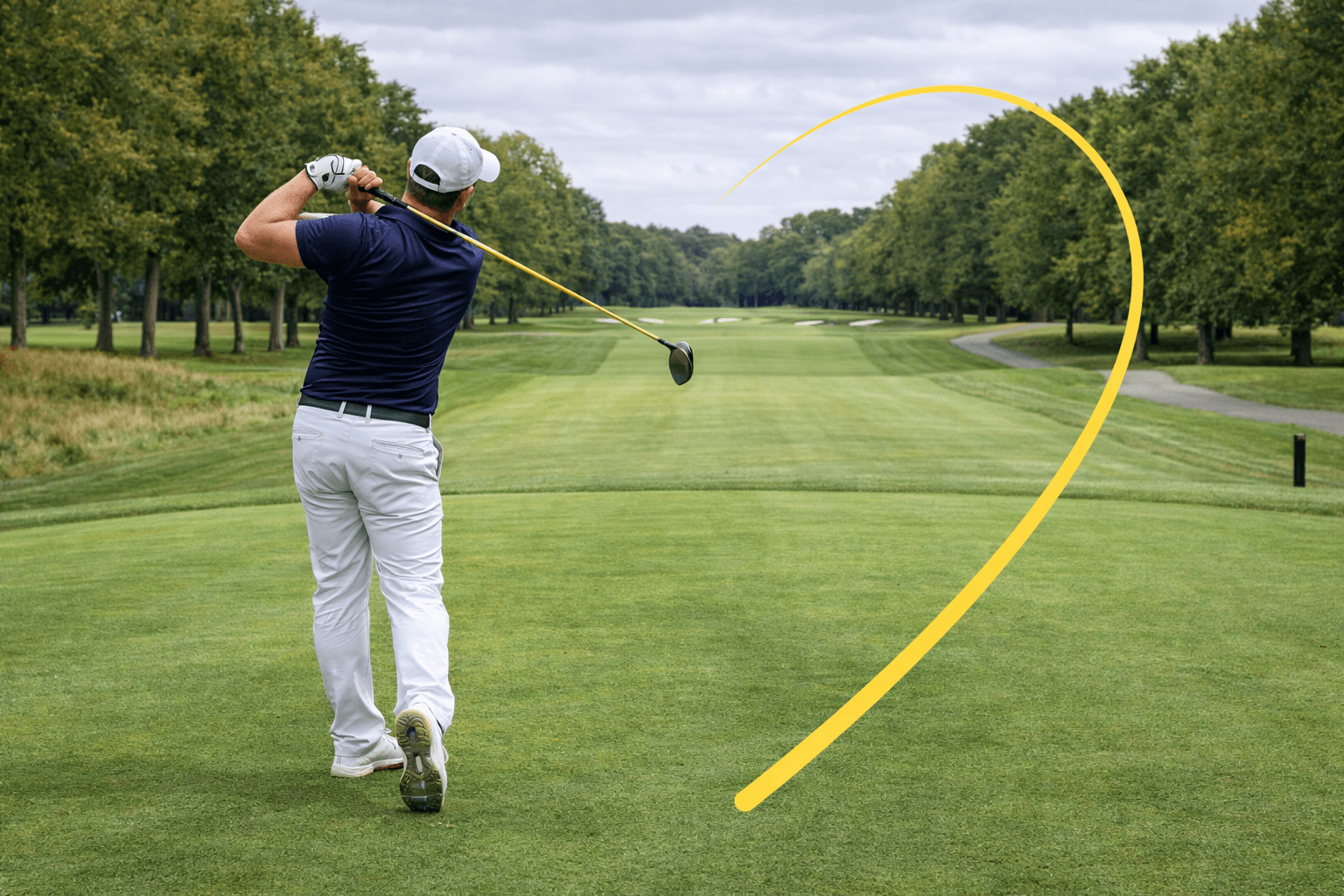
Hooking the golf ball can be just as frustrating as slicing it. One minute the shot looks perfect, the next it is diving sharply to the left and ending up in trouble.
If you are struggling with a hook, the good news is it is usually caused by a few common faults that are easy to identify and fix.
What Is a Hook in Golf
A hook is when the ball curves from right to left for a right handed golfer. It is typically caused by a closed clubface at impact combined with an in to out swing path.
While a slight draw can be a great shot, a hook is uncontrolled and often leads to missed fairways and lost balls.
1 Check Your Grip
A grip that is too strong is one of the main causes of a hook. If your hands are rotated too far away from the target, the clubface can close too easily.
Fix:
Adjust your grip so you can see two to three knuckles on your lead hand. This promotes a more neutral clubface position.
2 Watch Your Clubface
A closed clubface at impact will send the ball left and create that hooking spin.
Fix:
Focus on keeping the clubface square through impact. Avoid rolling your hands too aggressively during the swing.
3 Adjust Your Swing Path
An in to out swing path can encourage a hook, especially when combined with a closed face.
Fix:
Work on a more neutral swing path. Feel like the club is travelling more towards your target rather than too far inside.
4 Improve Your Alignment
Poor alignment can exaggerate a hook. Many golfers unknowingly aim too far right, which encourages a stronger release through impact.
Fix:
Set your feet, hips, and shoulders parallel to your target line to promote a straighter ball flight.
5 Control Your Tempo
Swinging too quickly or aggressively can cause your hands to over rotate, leading to a hook.
Fix:
Slow your swing down and focus on smooth, controlled tempo. This will help you maintain better control of the clubface.
6 Check Your Ball Position
If the ball is too far back in your stance, it can cause the clubface to close too early.
Fix:
Position the ball slightly forward of centre for irons and inside your lead heel for the driver.
7 Practise With Purpose
Fixing a hook requires consistent practice and awareness of what your clubface and swing path are doing.
Fix:
Spend time at the driving range focusing on grip, alignment, and tempo. Make small adjustments and track your progress.
Final Thoughts
If you are searching for how to fix a hook in golf, the key is understanding the relationship between your grip, swing path, and clubface.
A hook might feel difficult to control, but with a few simple changes, you can straighten your ball flight and gain much more confidence off the tee and into the greens.
Stick to the basics, practise regularly, and you will start to see more consistent and accurate shots.