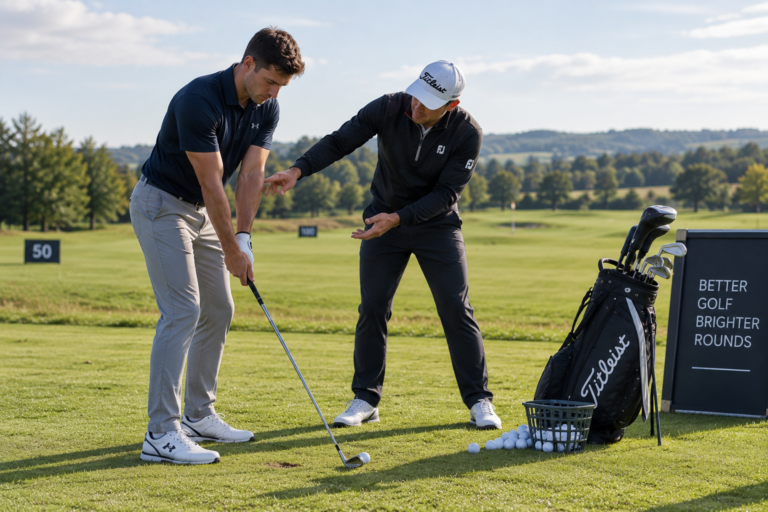
From First Swing to Full Obsession A Beginners Guide to Starting Golf
Every golfer remembers their first trip to the driving range. It usually starts with curiosity maybe a friend invites you along or you just fancy trying something new. You rent a set of clubs, buy a bucket of balls, and step onto the mat with no real idea what you are doing. And that is exactly where the journey begins.
Step One Your First Visit to the Driving Range
There is no pressure at the range, and that is why it is the perfect place to start. Grab a basket of balls and a rental set of clubs. You do not need to worry about having the latest gear or knowing all the rules.
Your first goal is simple make contact.
Do not overthink your swing. Set your feet shoulder width apart, keep your eye on the ball, and try to make a smooth swing. Some shots will go forward, some will not, and a few might surprise you. That one clean strike the one that flies straight and true is what hooks most people.
Step Two Getting Comfortable
After a few visits, things start to feel a little more natural. You begin to understand how hard to swing, which clubs feel easier to hit, and how satisfying it is to see the ball lift into the air.
This is where many beginners make their first small upgrade. Instead of renting every time, you might pick up a basic second hand set or a beginner package. Having your own clubs builds familiarity and confidence.
You might also start aiming at targets instead of just hitting balls. This is when practice becomes more engaging and more addictive.
Step Three Your First Round on the Course
Eventually, the range is not enough. You want to see what it is like on a real course.
Your first round will not be perfect and it is not supposed to be. You will lose balls, miss short putts, and probably take more shots than you expected. But you will also experience something new walking fairways, hitting off real grass, and dealing with different lies.
Keep it simple. Play from the forward tees, do not worry about score too much, and focus on enjoying the experience.
Step Four The Learning Curve
Once you have played a few rounds, the learning curve really begins. You start to notice patterns in your game maybe you slice the ball, struggle with chipping, or find putting difficult.
This is where improvement becomes part of the fun. You might watch tutorials, get a lesson, or spend more focused time at the range working on specific areas.
Small improvements feel huge in golf. Hitting one extra good shot per hole or avoiding one mistake can make a big difference.
Step Five The Addiction Kicks In
At some point, golf stops being something you try and becomes something you plan your week around.
You start checking the weather for tee times. You think about your swing when you are not playing. You replay your best shots in your head and analyse the bad ones.
You might upgrade your clubs, invest in better balls, or start tracking your scores. You begin to appreciate the details the sound of a pure strike, the roll of a well read putt, the strategy behind each hole.
Golf has a way of getting under your skin.
Final Thoughts
Starting golf does not require expensive equipment or perfect technique. It starts with a bucket of balls, a rented club, and a willingness to learn.
From those first awkward swings to the moment you cannot wait for your next round, the journey is what makes golf special. Every golfer starts at the same place and every one of them remembers the shot that made them fall in love with the game.
If you are just beginning, enjoy it. The frustration, the progress, and the small victories are all part of the experience.
Just be warned once it clicks, it rarely lets go.