Understanding Loft: Why It Matters in Your Golf Game
When choosing the right golf club, one of the most important—yet often overlooked—factors is loft. Whether you’re a beginner looking to improve consistency or an experienced player seeking better control, understanding what loft is and how it affects your performance can make a huge difference on the course.
What is Loft in Golf?
Loft refers to the angle of the clubface relative to the ground. Measured in degrees, this angle determines the trajectory and distance the ball will travel. A club with a higher loft will launch the ball higher into the air with more spin, while a lower loft produces a lower, more penetrating ball flight with less backspin.
Each club in your bag has a different loft for a reason. Drivers generally have the lowest loft, often between 8 to 12 degrees, whereas wedges like sand and lob wedges have the highest loft, typically between 54 to 60 degrees.
Why Loft Matters
The loft of a golf club plays a crucial role in:
Ball flight and trajectory
A higher loft increases the launch angle, which is ideal for soft landings on the green or clearing hazards.
Distance control
Less loft generally means more distance, but only when matched with the right swing speed and launch conditions.
Spin rate
Clubs with more loft create more backspin, which can help with control, especially on approach shots.
Understanding loft can help you choose clubs that complement your swing and playing style, allowing for better consistency and shot-making.
Which Loft is Right for You?
The best loft for your clubs depends on your swing speed, playing conditions, and personal preferences. Here’s a quick guide:
1. Drivers
High swing speed (100+ mph): Lower loft (8–10°) helps maximise distance.
Moderate to slower swing speed (under 100 mph): Higher loft (10.5–12°) helps improve carry distance and accuracy.
2. Fairway Woods
Typically range between 13° (strong 3-wood) and 18° (5-wood).
Players with slower swing speeds may benefit from higher loft woods to get the ball airborne more easily.
3. Irons
Game improvement irons often have lower loft for added distance.
Players’ irons have more traditional loft values for greater workability and feel.
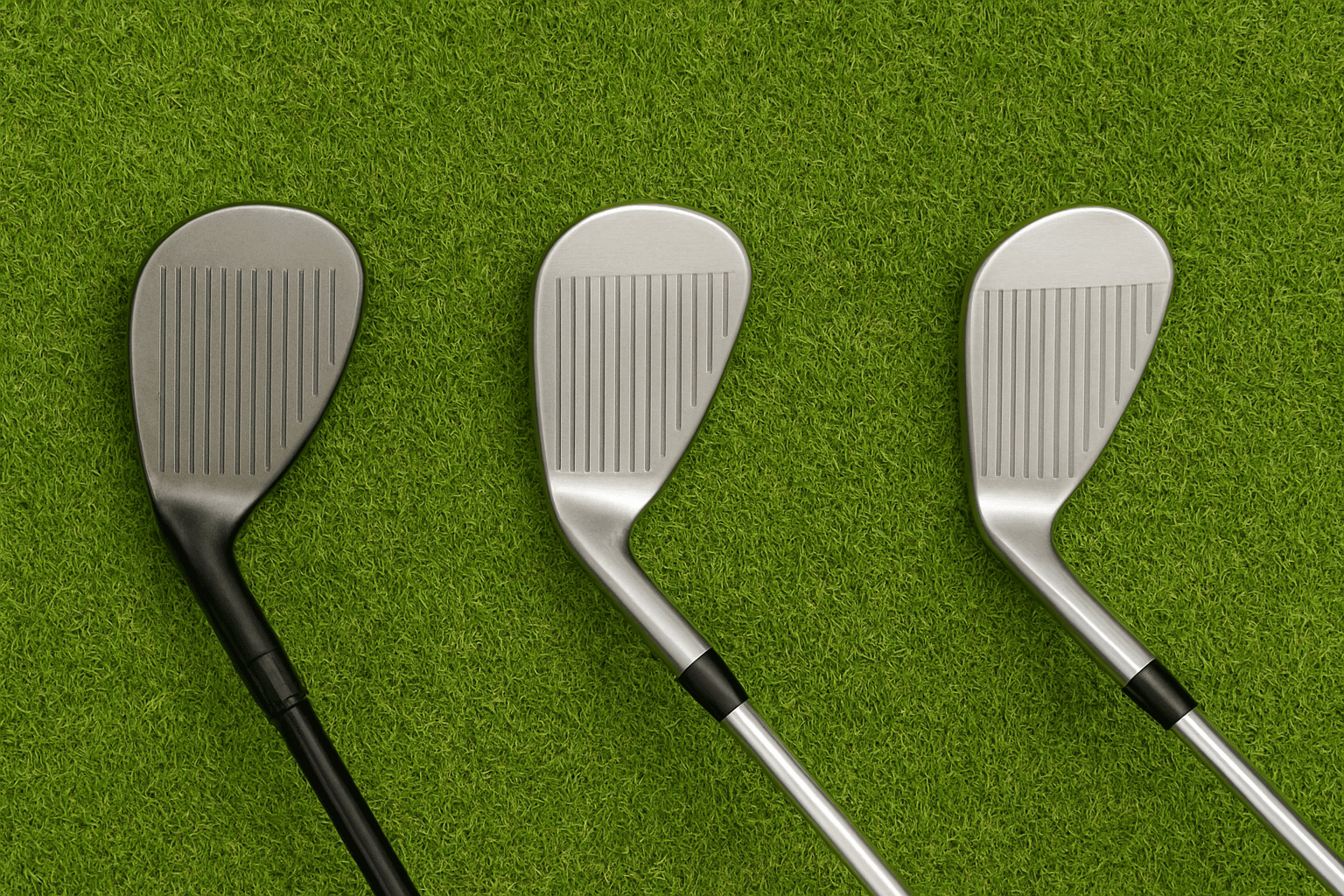
4. Wedges
Pitching Wedge: 44–48°
Gap Wedge: 50–52°
Sand Wedge: 54–56°
Lob Wedge: 58–60°
Higher loft wedges are essential for precise short-game shots, especially around the green.
Custom Fitting and Loft Gapping
Having your clubs custom fitted can ensure your lofts are properly spaced, avoiding overlap or large gaps in distance between clubs. Proper loft gapping ensures you always have the right tool for the job—whether it’s a long par-5 or a delicate pitch over a bunker.
Final Thoughts
Choosing the right loft for your golf clubs isn’t just a technical detail—it’s a game-changer. Whether you’re optimising your driver for maximum carry or fine-tuning your wedges for spin and control, understanding how loft impacts your shots is essential for improving your overall performance.
At Cotswold Golf Company, we’re always on hand to help you find the right loft configuration for your game. Explore our full range of clubs online, or get in touch for expert advice tailored to your playing style.